For families
A careful path through the site
A short route if you are reading with someone younger, or if you would rather start with two simple drawings than with an 1838 letter.
Open the desk. Look at the two original drawings of a box. Official wording says some people can see a pair like this without a stereoscope; ordinarily, a viewer is used. If the box stays flat, that is ordinary too.
Read how it got its name. In 1838 Wheatstone proposed “Stereoscope,” to indicate its property of representing solid figures, and he described two mirrors at a right angle.
Look at the cards. Official wording takes you from a first public exhibition in 1851 to the years, 1870 to 1920, when stereographs were most popular.
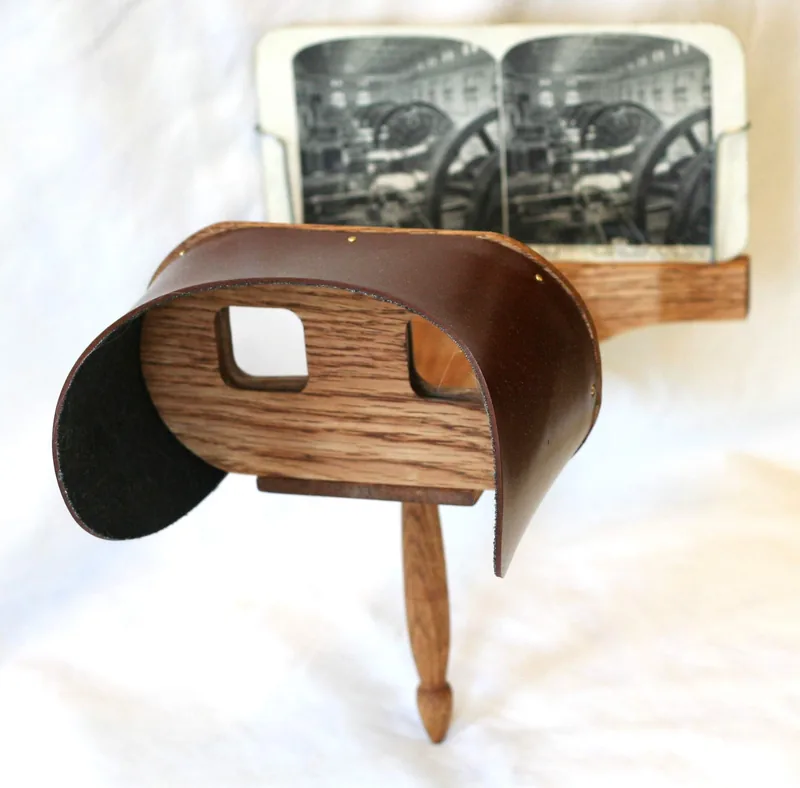
Meet a hand-held viewer. Official wording places Holmes’s design in 1859. The wooden viewer on this site is a modern reproduction.
Try the quiz if you like, or print a fact sheet and take it away.
Nothing on this site is meant as a test of anyone’s eyesight. The claims are small on purpose: official wording, dated photographs, and a desk you can try. Sister sites on motion and pareidolia are waiting if you want a different kind of looking.
Enjoyed this desk of two flat pictures that look solid?
No pop-ups. No intrusive advertising. Just interesting stuff. A little support helps the next illusions.im site get built.